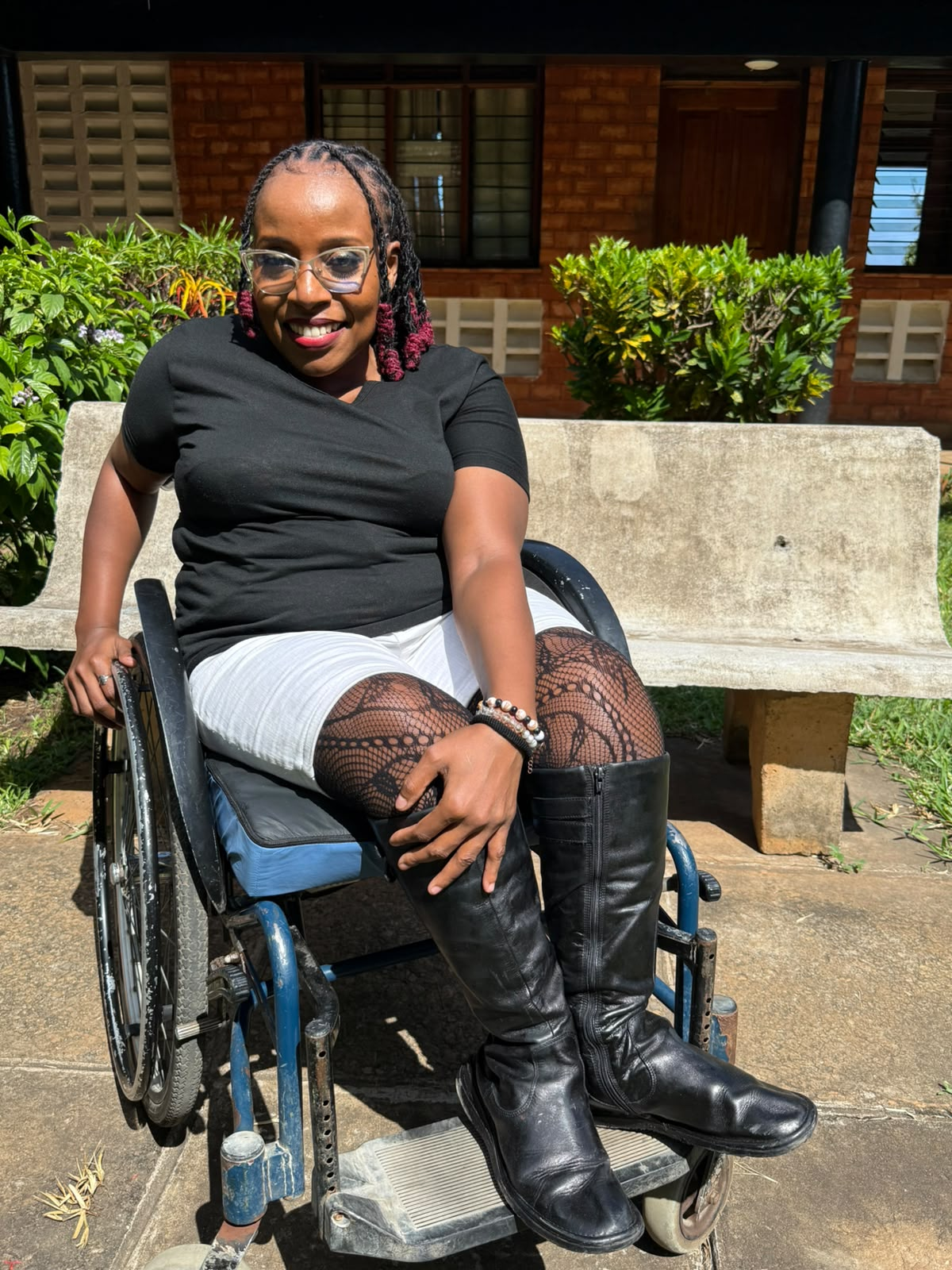
In the heart of Rwanda’s push for inclusive education and healthcare, one voice speaks with a unique kind of power—one that doesn’t require sound to be heard. Dorcas Nashimwe, a research assistant at eKitabu and a professional sign language interpreter with 18 years of experience, is a woman on a mission to ensure that no one is left in the shadows of communication.
A Calling That Found Its Voice
Dorcas’s journey began at just 12 years old. What started as a childhood effort to help deaf members of her church access the gospel eventually transformed into a lifelong career.

“I didn’t plan this to get money from it,” Dorcas recalls. “But the more I worked with the people, the more I could see their challenges. I saw the big difference I could bring—helping people communicate in conferences and bring up their ideas. That became a passion and a career that I am currently enjoying.”
Today, Dorcas serves as a vital bridge for communication and inclusion. At the University of Global Health Equity, she provides sign language interpretation for visiting lecturers, ensuring future medical doctors gain essential signing skills. Her goal remains revolutionary: a world where a deaf person can walk into a hospital and speak directly to their doctor, reclaiming their privacy and independence in their most personal moments.
Fighting for Recognition
For Dorcas, being “unstoppable” means confronting the systemic barriers that others might ignore. From the lack of formal sign language materials to the absence of professional certification systems in Rwanda, the hurdles are many. Yet, she remains at the forefront of the movement to have sign language recognized as an official language in Rwanda.
“When I see a deaf person starting from one point to become a person in decision-making positions, that is really rewarding,” she says. “Even if my contribution is a small portion, I’ll be happy to have such an achievement in the country.”
A Message for the Next Generation
Dorcas’s story is a testament to the fact that true power lies in service. When asked what she would say to young women and girls considering their own paths, her advice is rooted in purpose:
“We are able. We can do anything. Pursue careers that bring you joy and contentment. Ask yourself: What is our contribution to the world? What is our contribution to the marginalized community? When you think about your passion and helping the community, there is a big joy and motivation to serve.”
Through her work with eKitabu and her tireless advocacy, Dorcas Nashimwe continues to prove that communication is a human right, and she will not stop until that right is realized for everyone.