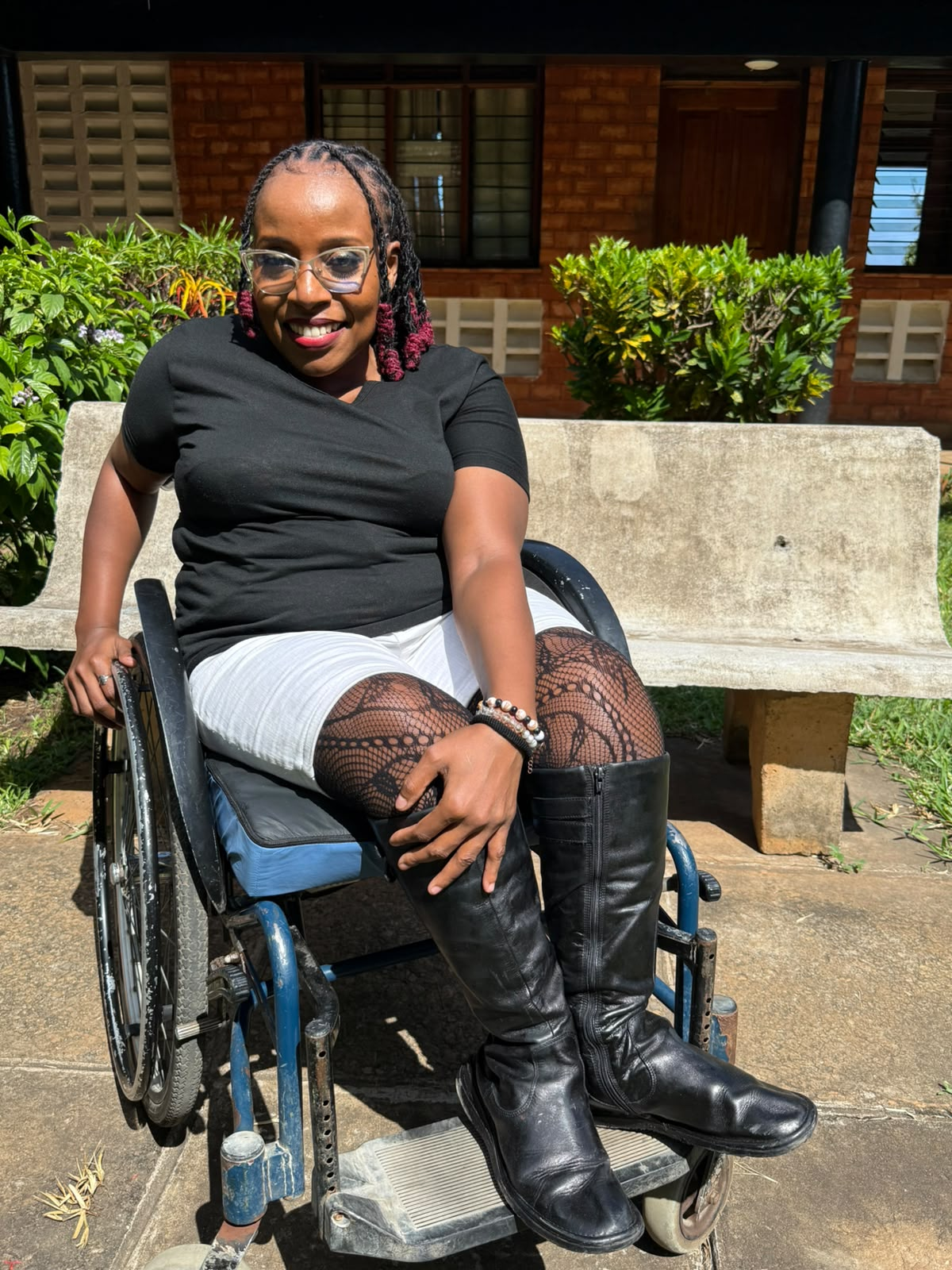
For many people, mental health struggles remain hidden behind silence, stigma, and misunderstanding. In many communities across Africa, conversations about mental illness are often avoided, misunderstood, or reduced to spiritual explanations. Yet behind that silence are real people navigating complex journeys of pain, healing, and resilience.
My name is Esenam Drah, a 31‑year‑old content creator and mental health advocate based in Accra, Ghana. I have bipolar disorder, but my diagnosis does not define my future. Instead, it has shaped my purpose: to speak openly about mental health and to challenge the stigma that keeps so many people suffering in silence.
My journey with bipolar disorder began in 2015, during my third year at university of Ghana, Legon. At first, I thought I was simply dealing with the emotional pain of a difficult breakup. But gradually, something deeper began to unfold. I started sleeping excessively, yet sometimes I could not sleep at all. My memory began to fail me. I withdrew from friends and social activities, and a heavy sense of hopelessness settled over my daily life.
At the time, I did not understand what was happening to me. What I did know was that I was afraid. I worried constantly that I might not graduate. I feared I was losing control of my mind. The uncertainty was overwhelming. Like many families in African contexts, my family initially turned to spiritual solutions. We prayed and sought spiritual intervention, believing the situation might have a spiritual cause.
But when my condition did not improve, my father suggested something that ultimately changed my life: we should seek professional medical help.

From Fear to Understanding
When I first visited a psychiatrist, I was diagnosed with schizophrenia.
Hearing that diagnosis felt like a death sentence. At the time, my understanding of mental health conditions was shaped by the same stigma and fear that exist in many communities. I felt frightened and ashamed.
Unfortunately, my first experience with psychiatric care did not make things easier. The psychiatrist I saw lacked empathy, and I left feeling even more confused and discouraged.
But my story took a different turn when I later met another psychologist doctor. She listened patiently, asked thoughtful questions, and reassessed my symptoms with care. Eventually, she explained that my experiences were more consistent with bipolar disorder. For the first time, I felt a sense of clarity.
Bipolar disorder is a condition that involves extreme shifts in mood and energy. During manic episodes, a person may feel unusually energetic, confident, or impulsive. Thoughts can race quickly, and decisions may be made without considering consequences. During depressive episodes, however, the opposite happens — overwhelming sadness, exhaustion, loss of motivation, and difficulty engaging with everyday life.
Understanding this helped me begin to make sense of what I had been experiencing.
But understanding a diagnosis and accepting it are two very different things.
Faith, Culture, and Medication
For nearly a year after my diagnosis, I struggled to take my medication consistently.
Part of that struggle came from cultural and religious beliefs surrounding mental illness. In many communities, mental health conditions are often described as spiritual attacks or spiritual battles.
I began to question whether taking medication meant that my faith was weak. I wondered if I should rely solely on prayer instead.
My perspective changed after listening to a podcast that discussed the role of science and medicine in healing. The speaker explained that doctors and researchers are also given wisdom and knowledge to develop treatments that help people live healthier lives.
That message resonated deeply with me.
It helped me understand that faith and medical treatment do not contradict each other. They can work together.
Later, during a nine‑month study program in Berlin, I made the decision to commit fully to my treatment plan. I began taking my medication consistently and prioritizing my mental health.
The results were transformative.
My sleep improved. My concentration returned. My academic performance increased. Most importantly, I felt stable again.
That experience taught me something I now share with others openly:
Treatment works. Recovery is possible.
When Honesty Leads to Stigma
Despite my progress, I soon encountered another challenge at workplace discrimination.
In 2019, I decided to disclose my bipolar diagnosis to the management of a school where I was teaching. I believed honesty and transparency were the right approach.
Within five weeks, I was dismissed. The reason given was that someone living with a mental health condition should not be working with children.
The experience was deeply painful. But it also opened my eyes to the reality that many people with invisible disabilities face: the fear that disclosure could lead to stigma, exclusion, or job loss.
Today, as a mental health advocate, I choose to speak openly about my diagnosis. I share my story because silence allows stigma to grow stronger.
However, I firmly believe that no one should face discrimination for disclosing a mental health condition.
My Message to Others with Mental Health Conditions
If I could speak to my younger self the 21‑year‑old version of me who was scared and confused, I would say something simple:
“You will achieve your dreams. Everything will be fine.”
To anyone who has recently been diagnosed with a mental health condition, I want you to know that your life is not over. A diagnosis does not erase your dreams or your potential.

Here are some lessons I have learned along my journey:
- Learn about your diagnosis. Understanding your condition helps you manage it more effectively and reduces fear.
- Seek professional help early. Mental health professionals are trained to guide you through treatment and recovery.
- Do not be ashamed of medication. Medication, when prescribed, can play an important role in stabilizing symptoms and improving quality of life.
- Consider therapy as part of your healing. Therapy can provide tools for managing stress, emotions, and life challenges.
- Build a strong support system. Trusted friends, family members, and support groups can provide encouragement during difficult moments.
- Be patient with yourself. Healing takes time. There may be setbacks, but progress is possible.
- Hold onto hope and faith. Faith can be a powerful source of strength, especially when combined with professional care.
Most importantly, remember this:
Your diagnosis is part of your story, but it is not the end of it.
Moving Beyond Token Inclusion
As the world marks International Women’s month and speaks about rights, justice, and action for women, we must remember that women with disabilities often carry a double burden discrimination based on gender and disability.
True inclusion must go beyond symbolic gestures.
Women with disabilities should be represented in leadership spaces, consulted during program design, and provided with reasonable accommodations in workplaces and institutions.
Mental health conversations must also happen throughout the year, not only during awareness campaigns.
As I often say:
“Don’t call us when the planning is done. Invite us to the table.”
Today, my life is not defined by bipolar disorder. Instead, it is defined by resilience, growth, and a commitment to challenge stigma wherever it exists.
Bipolar disorder did not break me. What nearly broke me was the silence and misunderstanding surrounding mental health. But when we speak openly about our experiences, we create space for healing, dignity, and hope.
My diagnosis and the associated stigma cannot stop me. My voice is unstoppable and so I am unstoppable!